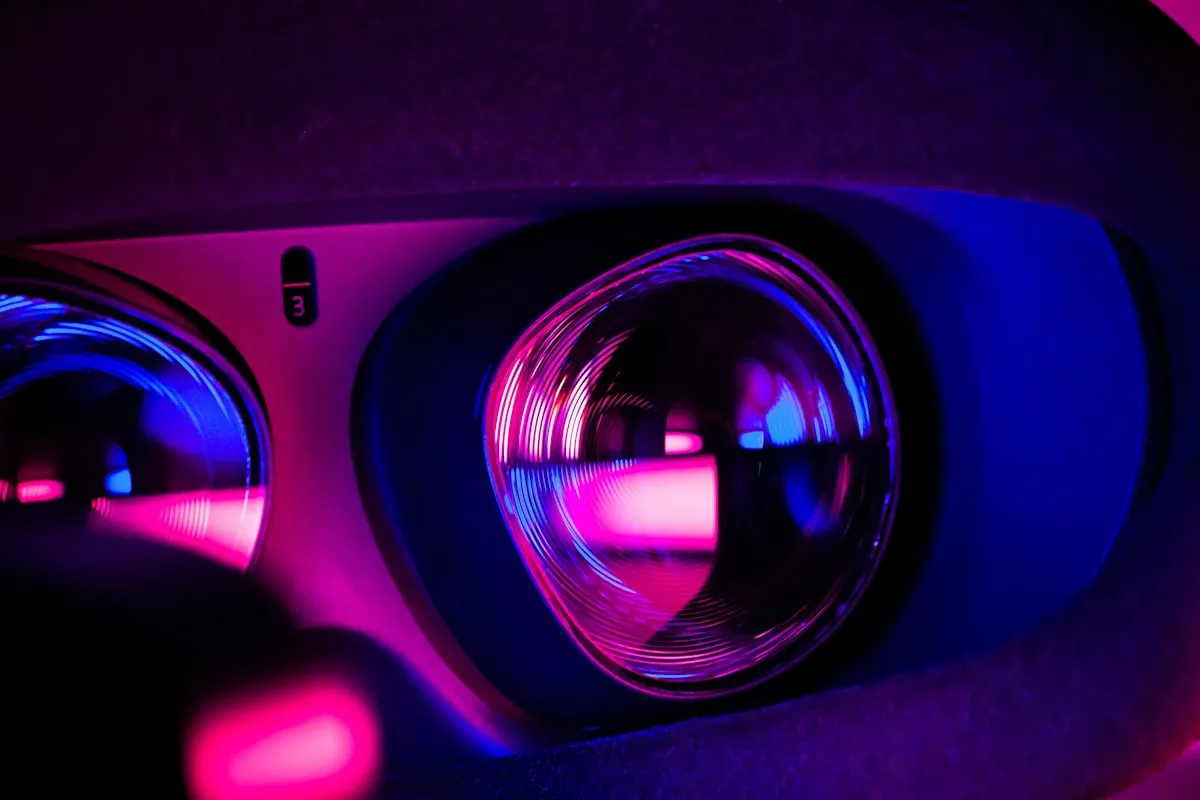
The scent industry is on the cusp of its most transformative decade. Valued at $3.6 billion in 2024 and projected to reach $6.4 billion by 2033, the aroma marketing sector is being reshaped by technologies that would have seemed like science fiction just a few years ago. From VR scent devices that let you smell virtual environments to AI systems that formulate custom fragrances in seconds, the future of scent is being written now, and it's more ambitious than anyone expected.
VR Scent Technology: Smell Meets the Metaverse
VR scent technology aims to add the missing sensory dimension to virtual reality experiences. While VR has mastered sight and sound, and is making progress on touch through haptic feedback, smell has remained the final frontier. Several companies and research labs are working to change that.
Current VR scent devices typically use one of two approaches:
- Wearable scent modules: Small cartridge-based devices attached to VR headsets that release micro-bursts of fragrance synchronized with virtual events. Walk through a virtual forest and smell pine. Enter a virtual bakery and smell bread. The cartridges contain concentrated scent compounds that can be triggered independently to create complex olfactory scenes
- Room-based scent environments: Commercial VR installations that pair standard diffusion hardware with software triggers. When a user enters a specific virtual zone, the room's scent system activates the corresponding fragrance. This approach is being tested in VR entertainment venues, immersive museums, and therapeutic applications
The applications extend well beyond gaming and entertainment:
- Real estate: Virtual property tours enhanced with signature scents, walk through a virtual model home and experience the scent staging as if you were physically there
- Tourism marketing: Destination marketing organizations using scent-enhanced VR to give potential tourists a multi-sensory preview of a beach resort, mountain lodge, or city market
- Therapy: Exposure therapy for PTSD and phobias, where controlled scent delivery adds realism and therapeutic effectiveness to virtual scenarios
- Training: Medical and military training simulations that include olfactory elements for more realistic and memorable learning experiences
The technology is still emerging, consumer-grade VR scent devices face challenges with miniaturization, scent library size, and rapid scent switching without cross-contamination. But the trajectory is clear: within this decade, smell will become a standard component of immersive digital experiences.
AI-Powered Fragrance Formulation
Artificial intelligence is reshaping how fragrances are created. Traditionally, developing a new scent required months of work by a trained perfumer, iterating through hundreds of variations to find the right balance of top, middle, and base notes. AI is compressing that timeline dramatically.
AI fragrance systems work by analyzing databases of thousands of existing formulations alongside consumer preference data, molecular chemistry models, and market trend analysis. They can:
- Generate novel formulations: Propose fragrance compositions that human perfumers might not have considered, unusual ingredient combinations that AI predicts will resonate with specific consumer segments
- Personalize at scale: Create individualized scent profiles based on a consumer's stated preferences, geographic location, cultural background, and even genetic markers (olfactory receptor genes vary significantly between individuals)
- Predict market success: Analyze trend data to forecast which scent families and ingredient combinations will gain popularity before they peak, giving brands a time-to-market advantage
- Optimize for function: Design fragrances specifically for functional outcomes (relaxation, focus, energy) by targeting molecular compounds with documented psychophysiological effects
The role of the human perfumer isn't disappearing, it's evolving. AI handles the combinatorial complexity and data analysis, while human noses provide the artistic judgment, cultural context, and emotional intuition that algorithms can't replicate. The result is a creative partnership that produces better fragrances faster.
Digital Scent Communication
One of the most ambitious frontiers in scent technology is the ability to transmit smells digitally, what researchers call "digital olfaction." Imagine receiving an email that includes a scent attachment, or a social media post that lets followers smell a new restaurant's signature dish.
The building blocks for digital scent communication are falling into place:
- Electronic noses (e-noses): Sensor arrays that can detect and identify scent molecules with increasing precision, enabling digital "capture" of ambient smells
- Scent synthesis hardware: Desktop and portable devices that can combine base aroma chemicals to reproduce a transmitted scent profile, like a color printer for smell
- Standardized scent protocols: Emerging frameworks for encoding scent data in transmittable formats, the olfactory equivalent of JPEG for images or MP3 for audio
While full digital scent communication remains years away from consumer adoption, the component technologies are advancing rapidly, driven by interest from gaming, telecommunications, marketing, and healthcare industries.
The Aroma Marketing Evolution
Aroma marketing itself is evolving beyond static, uniform scenting. The next generation of commercial scenting will be dynamic, data-driven, and personalized:
- Occupancy-responsive scenting: Systems that adjust fragrance intensity based on real-time foot traffic data, ramping up during peak hours and conserving oil during quiet periods
- Mood-adaptive environments: Scent systems that respond to ambient data, weather, time of day, crowd energy levels, to shift fragrance profiles in real-time. A retail store might transition from energizing morning scents to calming afternoon blends automatically
- Personalized retail scenting: Using loyalty app data to trigger a customer's preferred fragrance when they enter a store, the ultimate in personalized brand experience
- Biometric integration: Experimental systems that adjust scent based on aggregate biometric data (heart rate, stress levels) from wearable devices, creating environments that literally respond to how people feel
The scent industry's next decade will be defined by convergence, fragrance meeting AI, virtual reality, IoT, and biometric data to create experiences we can barely imagine today.
What This Means for Brands Today
You don't need VR scent modules or AI formulation to start building your olfactory brand identity, but understanding where the industry is heading helps you make smarter investments today. Brands that establish a strong scent identity now will be best positioned to extend that identity into emerging channels as the technology matures.
At Scentpression, we help brands build scent foundations that are ready for the future, starting with a signature fragrance, professional diffusion systems, and a strategic approach to how scent works across every touchpoint. The technology will evolve, but the fundamental principle won't change: scent is the most emotional, most memorable, and most powerful sensory channel available to any brand.
Build Your Scent Foundation Today
Book a free consultation and start building an olfactory brand identity that's ready for whatever comes next.
Book Your Consultation