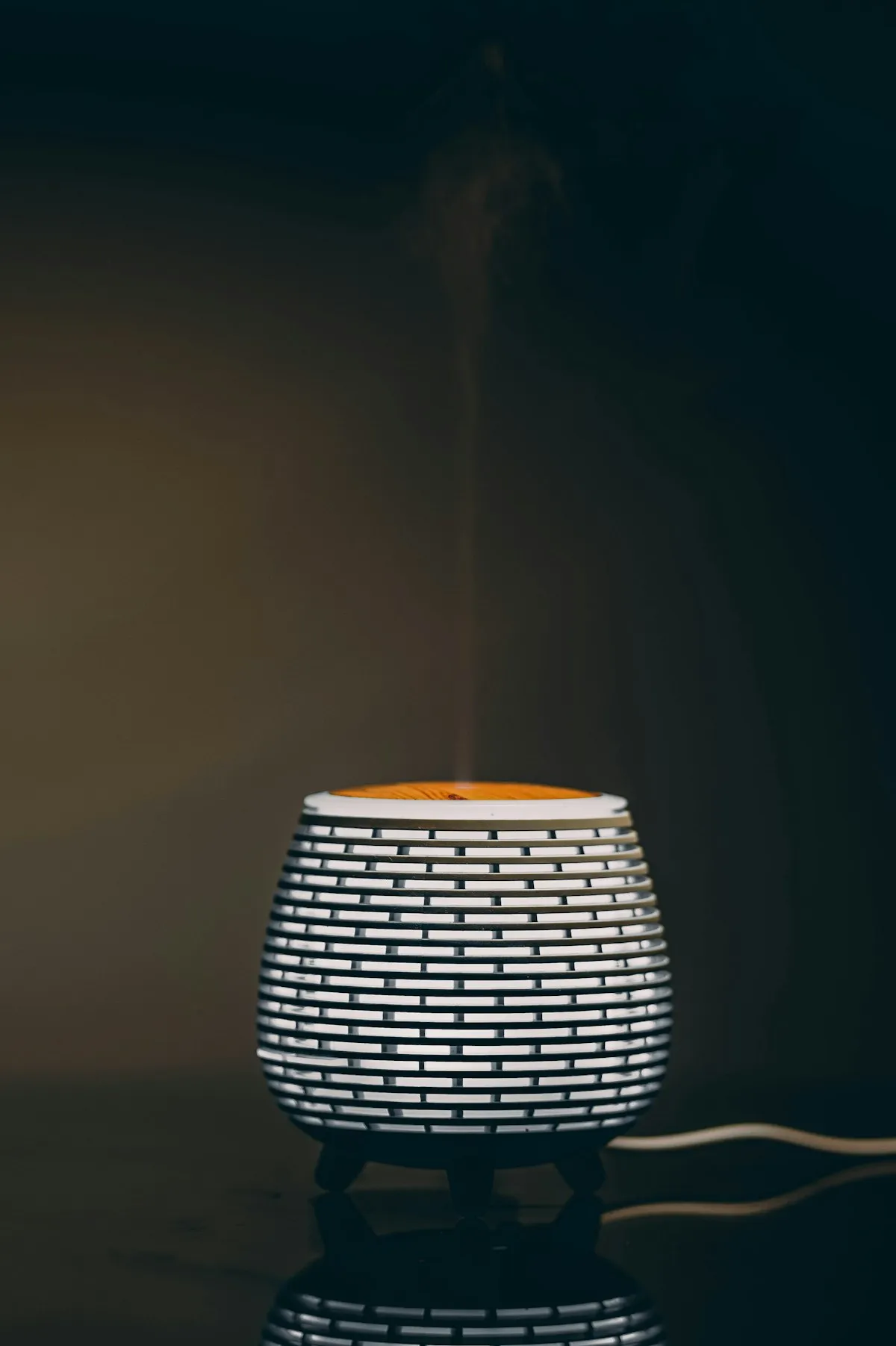
The home fragrance industry is undergoing a quiet revolution. What was once a market dominated by candles, plug-ins, and reed diffusers is rapidly shifting toward connected, intelligent devices that can be programmed, scheduled, and controlled from your phone. The smart diffuser is no longer a novelty, it's the fastest-growing product category in home fragrance, with sales growing 20-25% year over year.
What Makes a Diffuser "Smart"?
A smart diffuser connects to your home network, typically via Wi-Fi or Bluetooth, and can be controlled through a dedicated app or integrated into broader smart home ecosystems like Amazon Alexa, Google Home, or Apple HomeKit. But connectivity is just the beginning. The real value lies in what that connection enables:
- Automated scent scheduling: Program your diffuser to activate at specific times, morning citrus to energize your wake-up routine, evening lavender to signal wind-down time, and a fresh linen scent timed to greet you when you walk through the door after work
- Intensity control: Adjust fragrance strength from your phone without leaving the couch, dial it up when entertaining, dial it down for quiet evenings
- Multi-room coordination: Manage multiple smart fragrance diffusers across your home from a single app, creating a whole-home scent experience with different fragrances in different rooms
- Usage monitoring: Track oil levels, receive refill reminders, and monitor runtime to optimize fragrance oil consumption
The Rise of the App-Controlled Diffuser
The app-controlled diffuser has become the entry point for most consumers exploring smart home fragrance. These devices pair with a mobile app that provides a visual interface for scheduling, intensity, and sometimes even fragrance blending, combining two or more scent cartridges to create custom aromatherapy profiles.
What makes app control compelling isn't just convenience, it's consistency. Traditional diffusers run until they're turned off or until they run out of oil, which means fragrance intensity fades over time. Smart systems maintain consistent output by adjusting spray intervals automatically, ensuring your space smells the same at hour eight as it did at hour one.
IoT Integration: The Connected Fragrance Ecosystem
Industry analysts project that by the end of 2026, 30% of all diffuser sales will be IoT diffusers, devices that don't just connect to an app but integrate into the broader Internet of Things ecosystem in your home. This integration unlocks powerful automation scenarios:
- Geofencing: Your diffuser activates when your phone detects you're within a mile of home, so your signature scent greets you at the door
- Calendar sync: Your diffuser switches to an energizing scent blend before a work-from-home meeting block, then transitions to a relaxation blend when your calendar clears
- Sensor pairing: Humidity and air quality sensors adjust diffuser output in real-time, less intensity in humid conditions, more when the air is dry
- Voice control: "Alexa, set the living room to evening mode" adjusts lights, thermostat, and diffuser simultaneously
By 2026, 30% of all diffusers sold will feature IoT connectivity, up from just 15% in 2024. Smart fragrance is no longer early-adopter territory. It's mainstream.
Automated Scent Scheduling: The Killer Feature
If there's one feature that separates smart diffusers from traditional ones, it's automated scent scheduling. The ability to program different fragrances for different times of day transforms a diffuser from a passive background device into an active wellness tool.
Morning routines benefit from bright citrus or peppermint scents that increase alertness. Afternoon work sessions are enhanced by rosemary or eucalyptus for focus. Evening wind-down calls for lavender, chamomile, or warm vanilla. And nighttime sleep environments benefit from gentle, sleep-promoting blends at the lowest diffusion intensity.
This isn't just preference, it's science. The concept maps directly to circadian rhythm alignment, where different sensory inputs at different times of day support your body's natural energy and recovery cycles.
What to Look for in a Smart Diffuser
Not all smart diffusers are created equal. When evaluating options, consider these factors:
- Diffusion technology: Cold-air diffusion delivers the purest scent without heat degradation or water dilution, it's the professional standard for a reason
- Coverage area: Ensure the device is rated for your room size. A diffuser rated for 500 square feet won't perform well in a 2,000-square-foot open floor plan
- Oil compatibility: Some smart diffusers require proprietary pods or cartridges. Others accept standard essential or fragrance oils, giving you more flexibility
- App ecosystem: Look for an app that's well-reviewed and actively maintained. A beautiful diffuser with a buggy app is a frustration, not a luxury
- Smart home compatibility: If you're already in the Alexa, Google, or HomeKit ecosystem, prioritize diffusers that integrate natively
Scentpression and the Smart Home
At Scentpression, our fragrance oils are designed for cold air diffusion systems, the same technology that powers the best smart diffusers on the market. Whether you're running a standalone smart fragrance diffuser in your bedroom or managing a multi-room scent system through your smart home hub, our collection of over 240 curated fragrances provides the scent library your automated system needs.
We offer guidance on pairing our fragrances with the right hardware for your space, and our free consultation includes recommendations for scheduling profiles based on how you use each room throughout the day.
Ready to Make Your Home Smarter?
Book a free consultation and discover how automated scent scheduling transforms your daily routine.
Book Your Consultation